
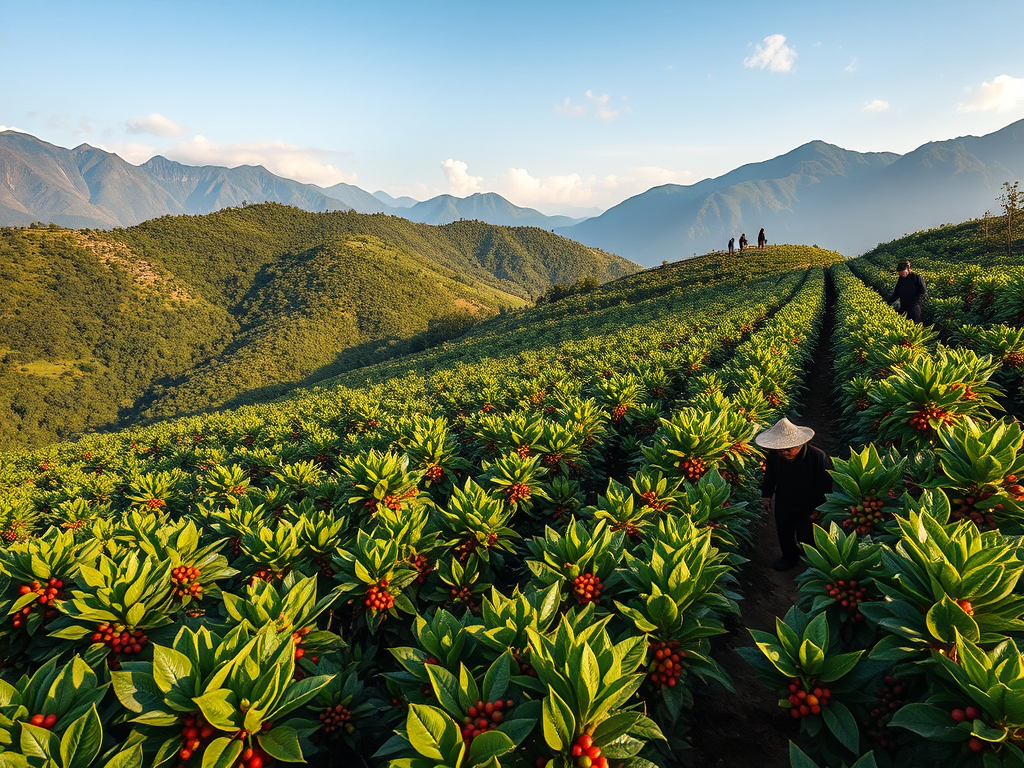
Global Coffee Industry Impacts on Yunnan Yunnan Province, located in the mountainous regions of southwestern China, has become the country’s coffee leader. It produces over 98% of China’s coffee, mainly the commodity-grade Arabica varietal Catimor. As the global coffee industry grows, Yunnan’s around 200,000 smallholder farmers, many from ethnic minority groups, face a mix of economic chances, risks, and significant social and environmental changes.
Economically, the impacts are complicated. Joining the global market has given farmers a vital cash crop. Three decades ago, Yunnan’s coffee output was minimal. Now, it produces over 100,000 metric tons each year, with exports going to major markets in Europe, the US, and increasingly to Asia. This growth has increased household incomes for many. However, farmers remain highly vulnerable to price volatility on the New York Intercontinental Exchange (ICE). As price-takers at the end of a lengthy supply chain, they bear most of the risk. For example, during the 2019-2020 coffee crisis, global prices fell below production costs, leading to significant losses for many Yunnan growers. While big companies like Starbucks and Nestlé have set up sourcing operations, which provide some stability through contracts, their buying power can also push down local margins. The economic benefits are real but unstable.
Environmentally, the growth has led to noticeable consequences. To meet demand, coffee farming has often taken over diverse ecosystems. A 2022 study in Remote Sensing found that coffee orchard area in Yunnan’s main growing area, Pu’er, grew by over 40% between 2000 and 2020, often at the cost of natural forests and tea fields. This push for monoculture makes the crops more vulnerable to pests and diseases like coffee leaf rust. This situation results in increased use of agrochemicals, which threaten soil health and water quality. Climate change also poses a real threat; research by World Coffee Predict suggests that up to 50% of China’s suitable coffee land could disappear by 2050 due to rising temperatures and unpredictable rainfall, putting the industry’s future at risk.
Socially, the coffee industry is changing rural communities. The cash economy has improved access to education and infrastructure in some regions. However, it also speeds up cultural changes. Farmers are leaving traditional, varied farming practices for coffee specialization, which reduces food security and diminishes traditional agricultural knowledge. In some reported cases, land leases to large commercial farms have displaced local communities or changed traditional land-use patterns. While companies promote sustainability initiatives, the advantages for the typical smallholder’s long-term resilience and cultural preservation remain unclear. The younger generation, aware of the hard work and market risks, increasingly moves to cities, which threatens the future of local coffee farming.
In conclusion, the global coffee industry has woven Yunnan into its complex fabric, bringing development along with dependence, growth alongside environmental strain. The future for Yunnan’s growers depends on moving beyond just being a source of low-cost beans. The growing trend of specialty coffee, direct trade, and geographic indication labels like “Pu’er Coffee” provides a route toward better value capture, environmental care, and cultural pride. How this story unfolds will depend on whether global consumers and companies appreciate not just the bean but also the people and landscapes that produce it.
 Yunnan Coffee Impacts
Leave a comment